After this guide, you will fully understand how to discover your color palette and use it while shopping for clothing and accessories.
Your colours are already in your mirror. You do not need an expert, an app, or a new wardrobe to find them. You need daylight, a mirror, and ten honest minutes with your own face.
This is not a test you can fail. There is no wrong season and no ugly palette. There is only the set of colours that makes your skin look even, your eyes clear, and your face rested, and the set that quietly works against you. Once you know which is which, choosing clothes becomes simple. You stop guessing. You stop buying colours that wear you instead of you wearing them.
That is what a color analysis does. It is a method, not a mystery. Top color analysts in North America and Europe all use the same steps I will show you here. The only difference is that they hold the fabrics for you. Today, you will hold them yourself.
What a color season means
Your color season is a broad description of your natural coloring: your skin, your hair, and your eyes, read together.
Analysts look at three scales:
- Temperature: warm or cool. Warm means a golden or peachy undertone. Cool means a pinkish or bluish one.
- Depth: light or deep. This is the overall impression of your coloring, light or dark.
- Saturation: clear or soft. Clear means bright and saturated. Soft means muted, with a slight grey cast.
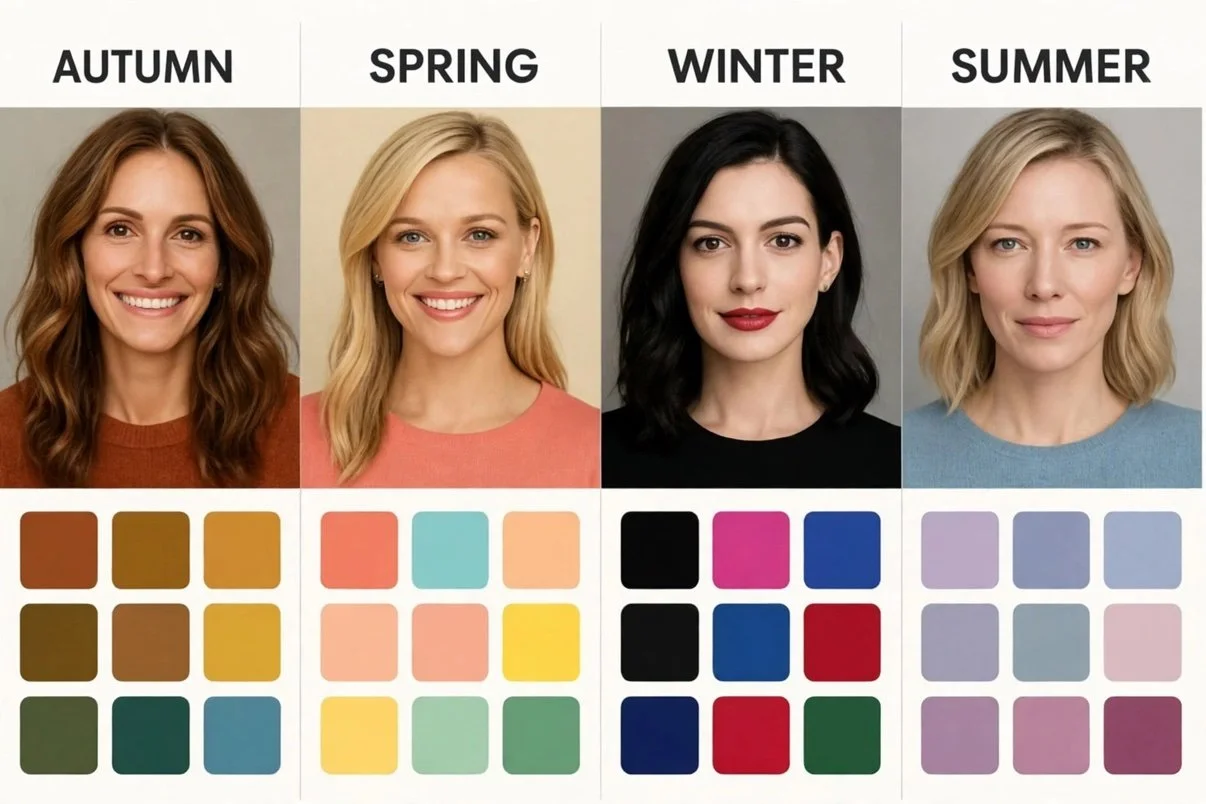
Put the three answers together and you get your season. Four families, each with its own palette: Winter, Spring, Summer, Autumn. Think of your season as a working hypothesis, not a lifelong verdict. It is a tool that makes choosing colours simpler. It is not a rule about who you are.


Step 1: warm or cool?
Temperature is the first fork in the road, and the most important one. It decides whether you belong to the warm families, Spring and Autumn, or the cool ones, Summer and Winter.
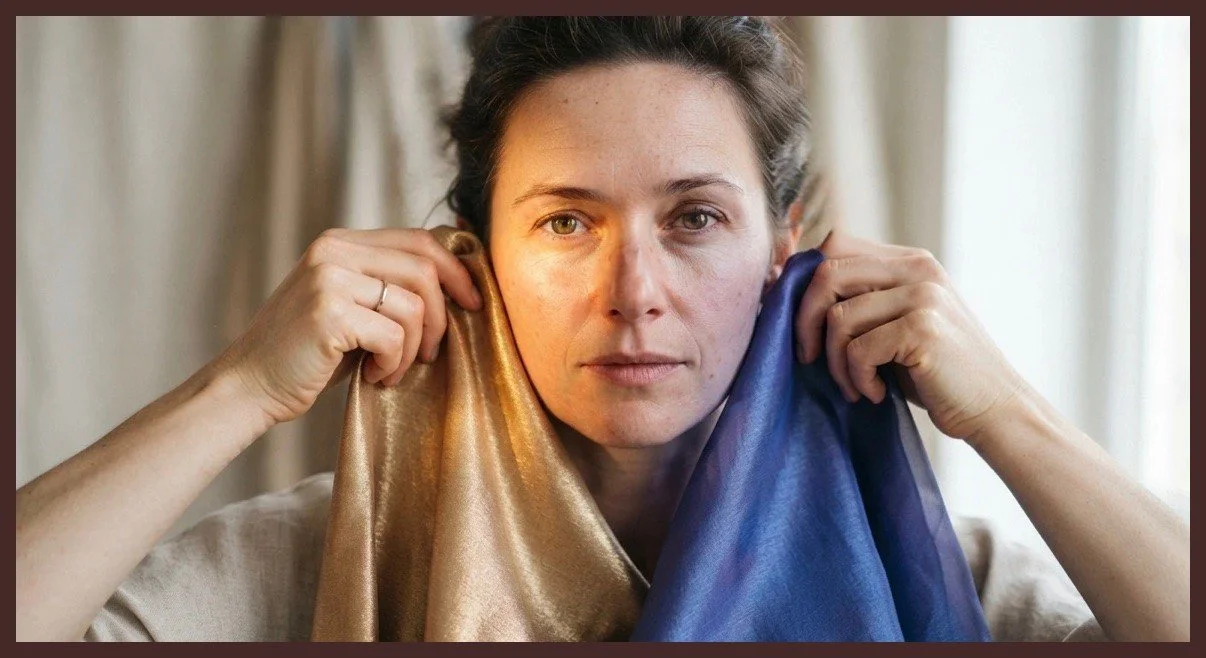
You will compare pairs of colours near your face. Do not ask which colour you like more. Ask what each colour does to your face. The right one makes your skin look even, softens shadows and redness, and lets your eyes stand out. The wrong one brings out grey, yellow, or shadows under the eyes.
Gold or silver. Hold a gold piece of jewelry near your face, then a silver one. If gold makes your skin glow, that points to warm. If silver does it, that points to cool. If you see no clear difference, do not decide yet. One test is never enough.
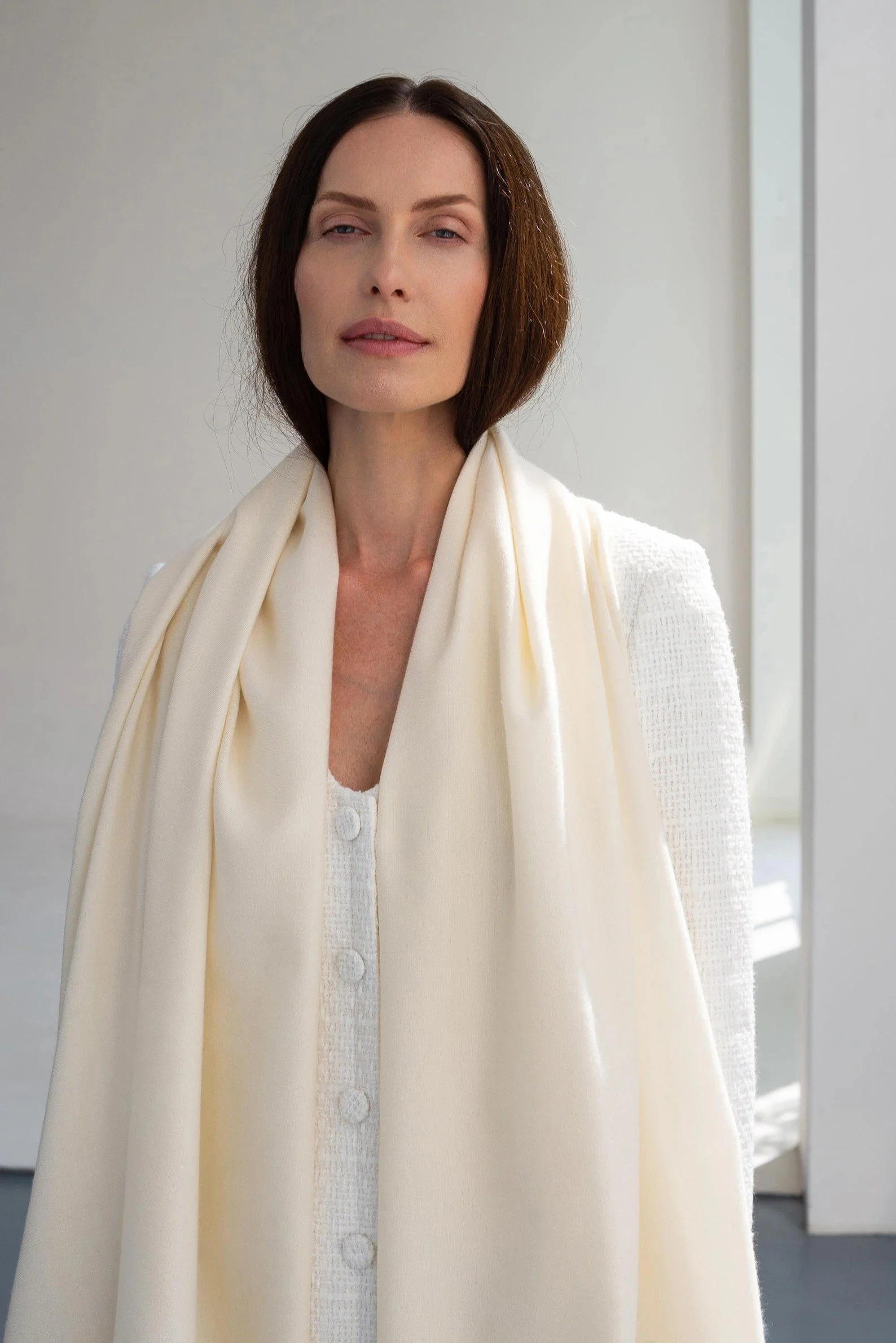
White or cream. Hold a pure, cool white fabric near your face, then a warm cream or ivory. If pure white makes your face look fresher while cream turns your skin yellow or dull, that points to cool. If cream evens your skin while white brings out a grey cast or shadows, that points to warm.
Coral or fuchsia. Hold a warm coral near your face, then a cool fuchsia, both bright and about the same lightness. Coral loves warm skin. Fuchsia loves cool skin. Make sure the fuchsia is genuinely cool, not salmon pink.
One more test people always ask about: the veins on your wrist. Bluish veins are linked to cool, greenish to warm. But this test is unreliable, especially on medium and dark skin, and no analyst would decide from it alone. Look for the same answer repeating across your comparisons. That repetition is your undertone.


Step 2: light or deep?
Now look at your skin, hair, and eyes together, as one picture.
If your overall coloring is mostly light, and very deep colours feel too strong near your face, as if the colour is wearing you, you fall toward the light end. If deep shades look good on you while very light ones make your face look paler or washed out, you fall toward the deep end.
This is about the whole impression, not your skin alone. Dark hair with light skin can still be deep. Fair skin with dark eyes can still be deep. Read all three features together.
Step 3: clear or soft?
Now compare the same colour in two versions: clear and muted. A clear blue next to a grey-blue. A bright pink next to a dusty rose.
If clear, saturated colours wake your face up and make your eyes brighter, you fall toward the clear end. If those same colours shout too loud and pull all the attention to themselves, while soft, muted shades calm your skin and make it look even, you fall toward the soft end.
Step 4: contrast, the quiet clue
Look at how strongly your skin, hair, and eyes differ from each other. High contrast means a big difference, like dark hair against light skin. Low contrast means everything sits close together in lightness.
Contrast is a supporting clue, not a fourth scale. But it helps. High contrast often goes with the clear seasons, Winter and Bright Spring. Low contrast often goes with the soft seasons, Summer and Soft Autumn.

Step 5: check it with draping
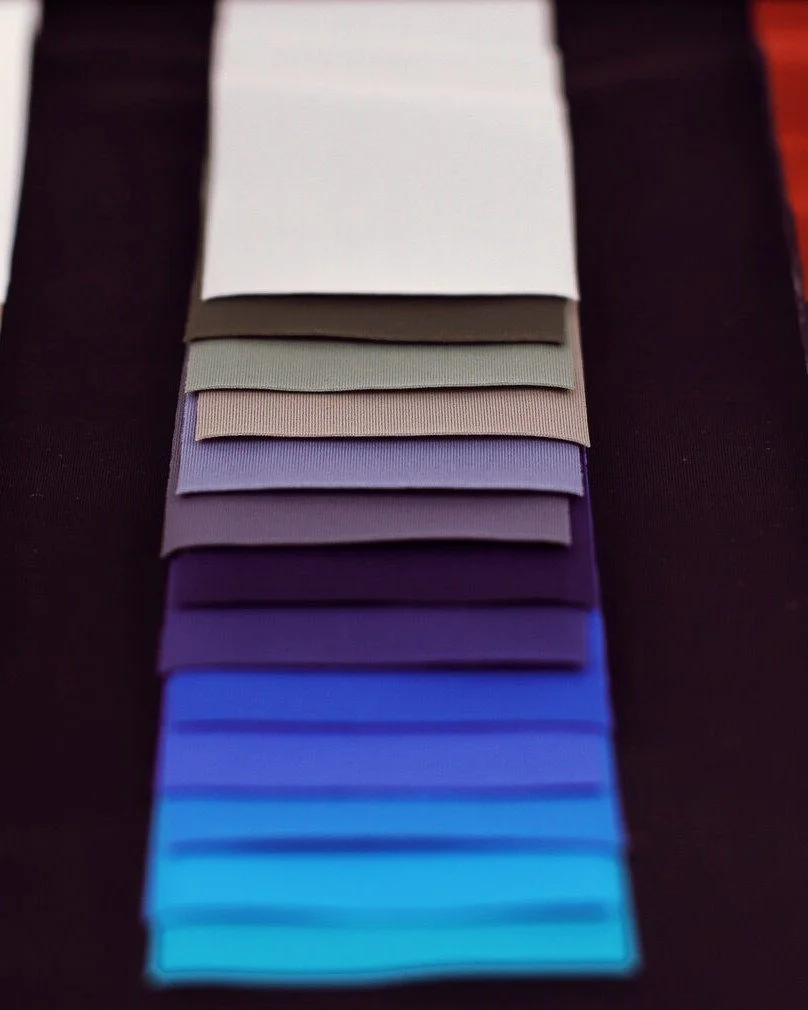
This is what a professional session is built on, and you can do it at home: draping.
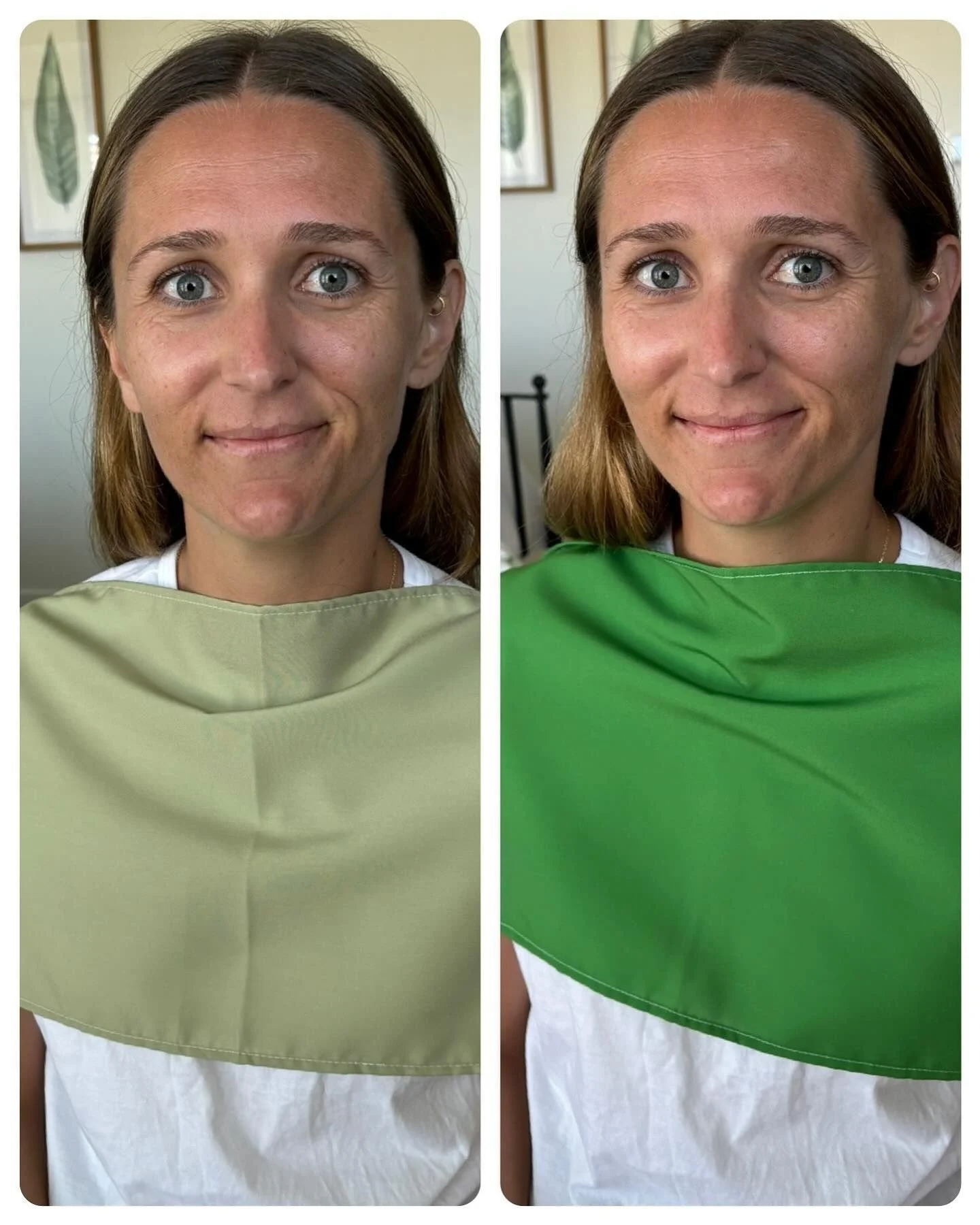
Take fabrics in pairs, warm and cool, light and deep, clear and muted, and hold them under your face one at a time. Photograph each one in the same daylight, in the same place, and compare the photos side by side. The camera remembers what your eyes forget.
Watch for the same things the analyst watches: does the skin even out, do the eyes clear, do the shadows under the eyes and around the mouth soften or deepen? The fabric that makes you look rested is your fabric.
Do not trust a single test, and do not trust a single selfie. A phone camera adjusts its white balance on its own, and it can shift your tones before the analysis even begins. Several comparisons, in the same light, will tell you more than any one app result.
Your four seasons
Now put your three answers together.
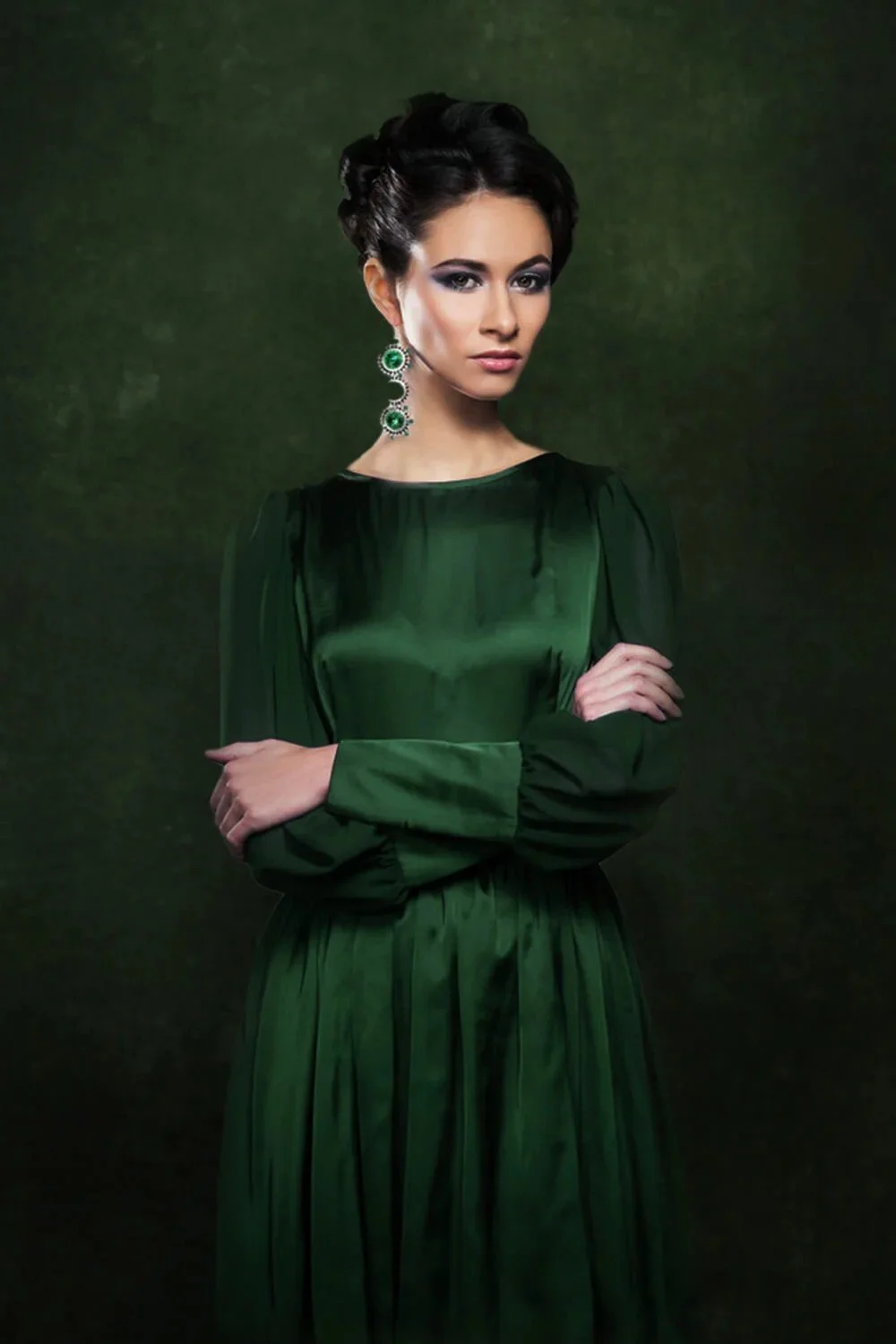
Winter: cool, deep, and clear. Dark hair with light skin is a classic example. Your palette is clear and saturated: jewel tones like emerald, sapphire, and ruby, icy shades, pure white and black. Colours that would overwhelm others only wake you up.
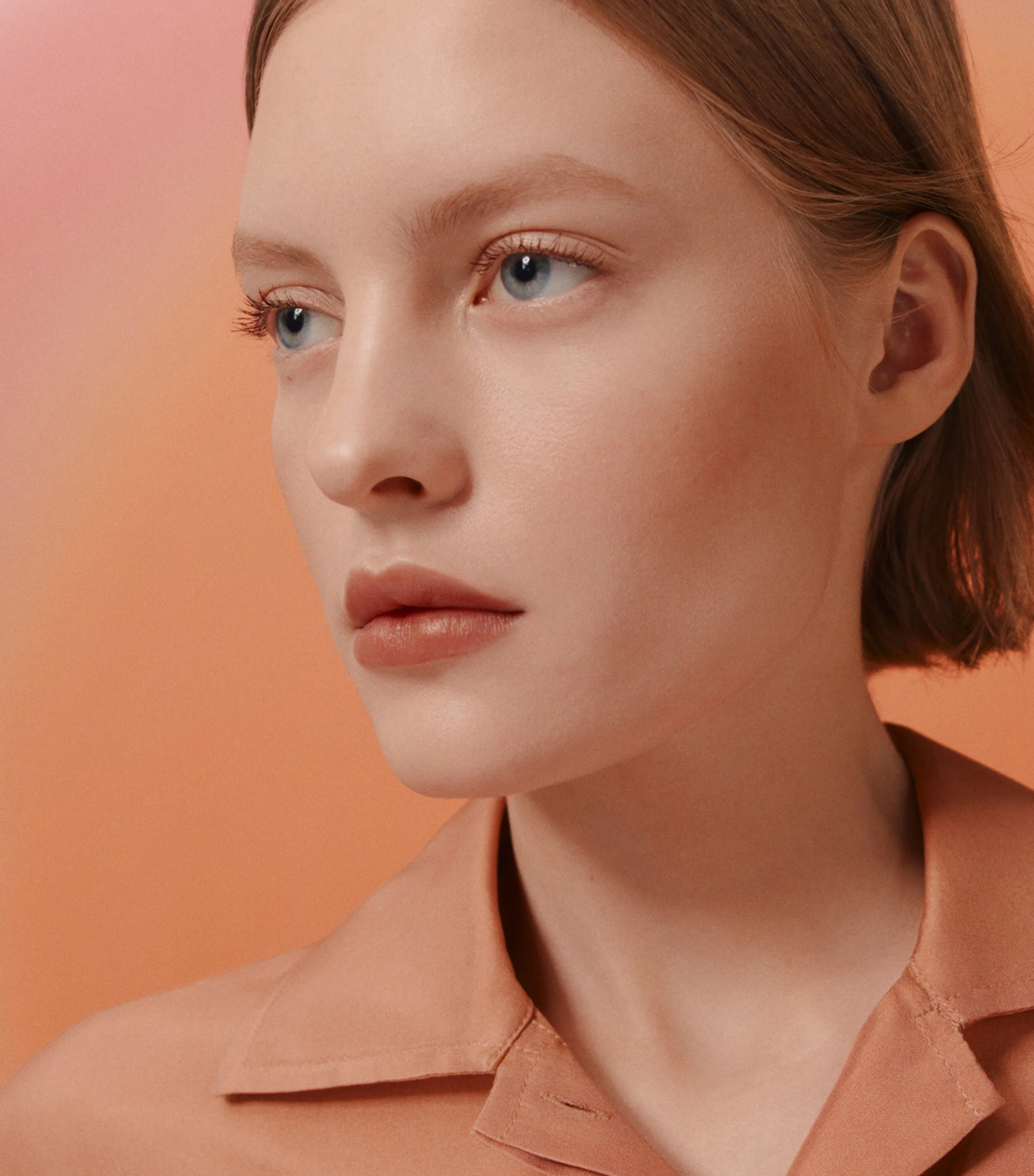
Spring: warm, light, and clear. Golden or peachy tones are often visible in your coloring. Your palette is warm and fresh: peach, coral, warm ivory, golden yellow, fresh green.
Summer: cool, light, and soft. A cool pinkish undertone with ashy hair is a typical example. Your palette is soft and cool: dusty rose, lavender, grey-blue, muted raspberry.
Autumn: warm, deep, and soft. Your coloring is warm, rich, and earthy. Your palette is deep and muted: terracotta, olive, mustard, burnt orange, dark teal.


If you do not fit in one season
Many women do not fit neatly into one of the four. That is normal, and the method has an answer for it.
Each season splits into three versions, which gives twelve seasons in total. Spring can be Light, Warm, or Bright. Summer can be Light, Cool, or Soft. Autumn can be Soft, Warm, or Deep. Winter can be Deep, Cool, or Bright. The version tells you which of your three scales speaks loudest. A Light Summer is light first and cool second. A Deep Autumn is deep first and warm second.
There is also a simpler way in, called the tonal approach. Instead of asking which season you are, it asks which single trait of your coloring stands out most: Light, Deep, Warm, Cool, Clear, or Soft. If one trait clearly dominates, start from it and build your palette around it.
Use the twelve seasons to narrow your palette. Use the four seasons to understand it. Neither is a verdict. Both are tools.
Mistakes to avoid
Testing under artificial light. Warm or cool lamps change how your skin reads. Compare colours in natural daylight, without bright sun or coloured reflections.
Using dyed hair as a guide. Color analysis is based on your natural coloring. Dyed hair can make you look warmer, deeper, or higher in contrast than you are. Use your natural colour, or the colour at your roots, as your reference.
Trusting one test. No single sign gives a reliable answer on its own. The vein test, one piece of jewelry, one app result: each can mislead. Look for several clues pointing the same way, then check them against real fabric near your face.
Treating an app result as final. Apps promise high accuracy, but apps often disagree with a professional draping, and there is no published study that gives a reliable accuracy number. A phone photo shifts with light and camera, so the same face can read warmer or cooler from one photo to the next. Your face, in daylight, with real fabric, is a better analyst than your phone.
How to use your palette
Save your season on your phone, and keep it with you when you shop.
Colour matters most near your face: tops, jackets, scarves, earrings. That is where the wrong colour adds shadows and the right one adds light. For the rest of your outfit, your neutrals matter more: the darks and lights that hold everything together.
And keep what you love. Your season is a guide, not a rule. If a colour outside your palette makes you feel beautiful, wear it. The method exists to make choosing easier, not to take your joy away. The most important thing your palette can do is show you how much beauty is already in your own coloring, waiting to be noticed.
Start today, with love
You do not need to become someone else to look beautiful. You only need to see what is already there: the warmth or coolness of your skin, the depth of your eyes, the clarity of your own colours.
Take the ten minutes. Stand by the window. Hold the gold, then the silver. Watch your own face change. That moment, when you see which colour lets you shine, is a small act of kindness toward yourself. It says: I am worth looking at closely. I am worth dressing well.
Your beauty does not need permission. It needs daylight, a mirror, and your own attention. Start today, with love.
With love, Kristina Wushke.
Where the method comes from: Johannes Itten, who first explored the link between a person's coloring and the colours that suit them at the Bauhaus in the 1920s; Carole Jackson, Color Me Beautiful (1980), which brought the four seasons to a wide audience; the 12-season system used by professional analysts today.